 EN
 FR
 DE
 NL


Destinations
Kyrgyzstan Itinerary: 7, 14 and 21 Day Routes
Three routes that work, depending on how much time you have: the northern loop in one week, the grand tour in two, and the full crossing to Osh ...
14 min read
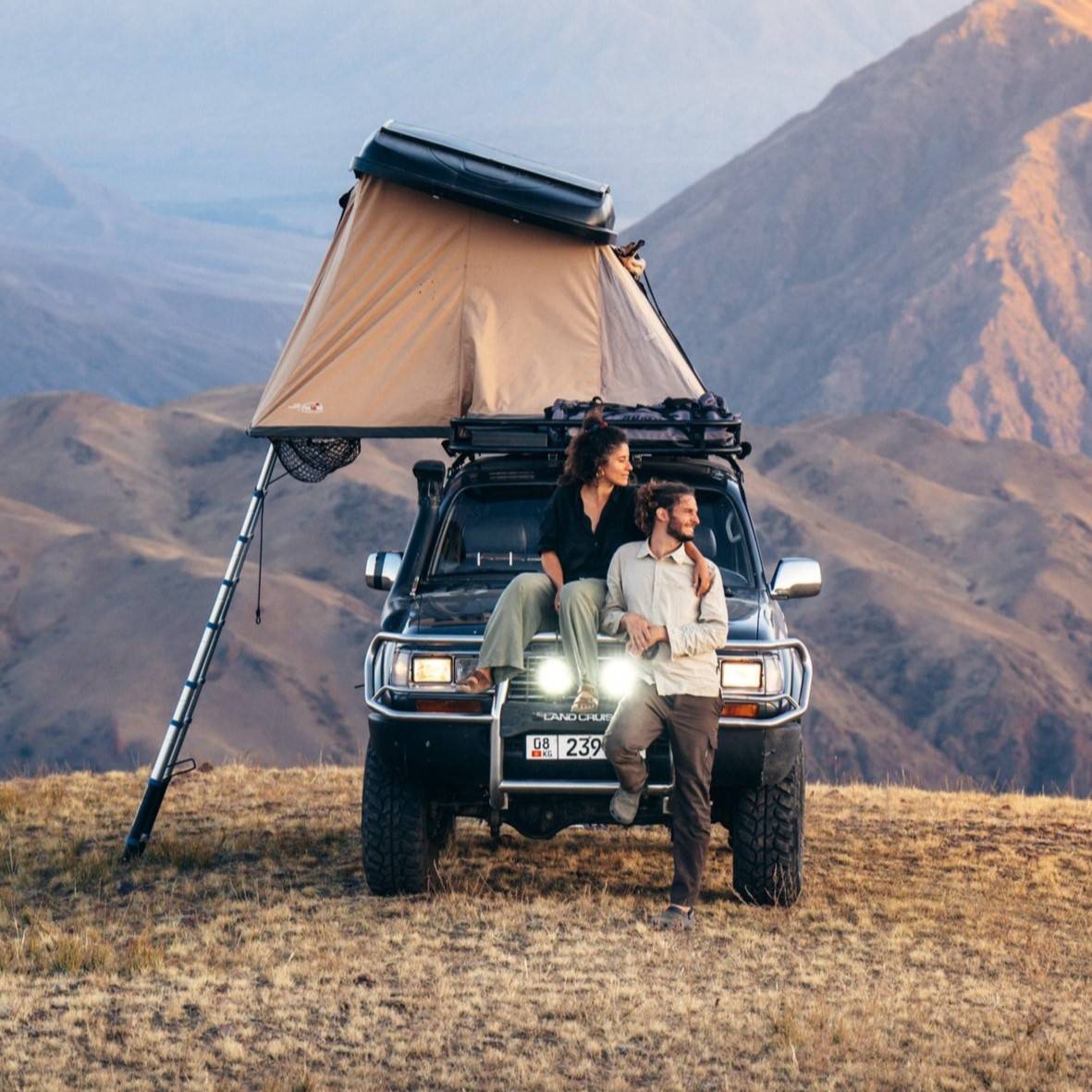
Find the right rental car or 4x4 for your Kyrgyzstan road trip. Compare verified rental companies in Bishkek and Osh, browse itineraries, and book with confidence.
Rooftop tent, campervan, or 4x4, each suited to a different style of trip. Cover and mileage are shown on each vehicle.
Kyrgyzstan is one of the last places on Earth where you can drive for days without pavement, and that's not a problem, it's the entire point. The country spans 199,000 km² of which 94% is mountainous terrain. Outside Bishkek and Osh, the road network is largely dirt, gravel, and seasonal tracks that only a proper 4x4 can handle reliably.
What sets Kyrgyzstan apart from better-known off-road destinations is its total freedom. There are no permits required to camp on the open steppe. No national park fees for most areas. Nomadic families welcome travellers into their yurts with airag and a meal. Wild camping isn't a workaround, it's the primary way locals and travellers alike experience the country.
The country sits at the crossroads of the ancient Silk Road, bordering Kazakhstan, China, Tajikistan, and Uzbekistan. This geography makes Kyrgyzstan a natural starting point for multi-country overland expeditions. Most rental companies on Rent2explore include border crossing permits as a paid extra, covering Kazakhstan, Tajikistan, and Uzbekistan.
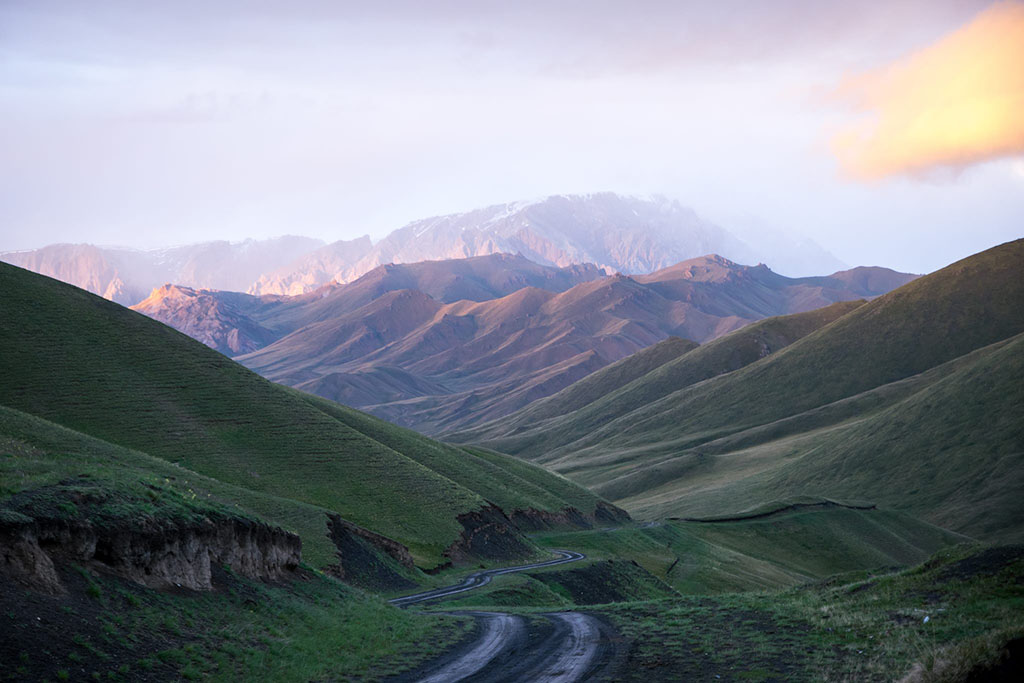
The most common question from first-time visitors: "Do I really need a 4x4, or can a regular car manage?" The answer depends entirely on where you plan to go. For the main Bishkek-Osh highway or the Issyk-Kul ring road, a standard car technically works. For everything that makes Kyrgyzstan worth visiting, Song-Kul, the Naryn gorge, the Torugart pass, a proper 4x4 is not optional. Here's how the three options compare:
| 4x4 Bare | 4x4 + Rooftop Tent | Campervan | |
|---|---|---|---|
| From / day | From $55 | From $70 | From $110 |
| Sleeping | Guesthouse · yurt · own tent | On the roof, anywhere | Inside, bed + mattress |
| Kitchen | Optional add-on | Included | Included (full setup) |
| Off-road level | Adventurous · Extreme | Adventurous · Extreme | Gravel · Off-road |
| Ideal for | Yurt/guesthouse stays, Pamir loop | Wild camping, autonomy | Families, comfort seekers |
| Pick-up | Bishkek · Osh | Bishkek · Osh | Bishkek |
Compare 4x4 rooftop tent rentals · Compare campervan rentals · Compare 4x4 rentals
Standard AWD crossovers (RAV4, Tucson, CR-V) are not suited for Kyrgyzstan mountain tracks. Only book vehicles tagged "Adventurous" or "Extreme" for off-road use.
Issyk-Kul is the world's second-largest alpine lake, 182km long and set at 1,607m altitude. It never freezes, even in winter, and the surrounding Tian Shan peaks rise to over 7,000m. From Bishkek it's just 3 hours east along a mostly paved road. Side valleys, Jeti-Oguz (Red Rocks), Karakol, Barskoon waterfall, open into wild terrain with glaciers and petroglyphs. An Adventurous-rated 4x4 is sufficient for most routes here.
The Song-Kul plateau sits at 3,016m and is Kyrgyzstan's most iconic camping destination. Five different mountain passes approach the lake, none are paved. In summer (July-August) the plateau fills with nomadic families and their horse herds; in June and September you may have it almost to yourself. The silence, the light, and the scale of the landscape are unlike anywhere else in Central Asia. Access requires a minimum Extreme-rated 4x4 via the Dolon or Moldo-Ashuu passes.
The Naryn River gorge is one of the most dramatic drives in the region, a narrow canyon that opens gradually into high-altitude desert. The road to Torugart (3,752m, Chinese border) passes through wilderness with almost no services for 200km. This is serious expedition territory requiring Extreme-rated vehicles, a full fuel load, and satellite communication. The reward is complete isolation and landscapes that few travellers reach.
Osh is Kyrgyzstan's second city and the gateway to the Pamir. The Alay Valley south of Osh offers extraordinary scenery, the 7,134m peak of Lenin rises directly above the valley floor. The road continues to Sary-Tash and the Irkeshtam border crossing into Tajikistan, the start of the legendary Pamir Highway overland route. Osh also connects westward to the Fergana Valley, one of Central Asia's most historically rich regions.
Every route below is doable in a standard 4x4, with rooftop tent for wild nights, or with guesthouse/yurt stops using a standard 4x4 rental. Allow at least 10-14 days to see the country properly.
The easiest introduction. Follow the northern shore of Issyk-Kul to Karakol, then head south into the Jeti-Oguz valley (Red Rocks). Roads are mostly paved, an Adventurous vehicle is sufficient. Excellent first trip for Kyrgyzstan newcomers who want to understand the scale of the country without the technical challenges.
The most iconic Kyrgyzstan self-drive. Leave Bishkek, cross the Dolon Pass (3,030m), and descend into the Song-Kul plateau (3,016m). Alpine lake, nomadic yurts, no fences, no noise. Return via Kochkor or Naryn. Requires a minimum Extreme-rated 4x4 for the pass approaches.
Driving tips: The Kochkor approach via the Dolon Pass is the most reliable entry. The final 12 km descent to Song-Kul is steep loose gravel with tight switchbacks, reduce tyre pressure to 1.8 bar and let the engine brake do the work. Fill up fully in Kochkor: there is no fuel on the plateau. Plan to arrive before 16:00 to secure a campsite with daylight. The north shore is quieter than the main yurt clusters on the southern bank. In early June or late September you may have the lake almost to yourself; in July expect a handful of other overlanders parked up within sight. The Moldo-Ashuu approach from Naryn is longer and the track is looser after rain, experienced drivers only.
The definitive Kyrgyzstan road trip. Head east to Issyk-Kul, south via Song-Kul plateau, continue to Naryn and the Torugart region, then west to Osh through the Fergana Range. Drop the vehicle in Osh (one-way available with most Rent2explore partners) and fly home. Covers all major regions in a single loop.
The legendary multi-country route. Bishkek to Osh, south through the Alay Valley and into Tajikistan via the Irkeshtam pass (2,841m), then along the Pamir Highway (M41) to Dushanbe or Murghab. Requires an Extreme-rated vehicle, Tajikistan visa, and a border crossing permit arranged at booking.
Driving tips: The Irkeshtam crossing opens Monday-Friday only, never attempt it on a weekend. Expect 3-6 hours of border formalities; bring cash in USD and snacks. South of Sary-Tash the road becomes rough dirt track: air down to 1.8 bar and keep speed under 40km/h to avoid rock strikes on the undercarriage. The Murghab plateau section (3,600-4,200m) is where altitude sickness becomes a real risk for passengers, drive slowly and allow a day of acclimatisation in Murghab before continuing. Past Murghab there is no reliable fuel for 250km: carry a minimum of 30L in jerrycans. Have your GBAO permit, Tajikistan e-visa, and rental border crossing paperwork fully prepared before leaving Bishkek, there is no consular assistance in the Pamir.
Lower passes (Dolon, Kaldama) are generally open by mid-June. Song-Kul is accessible by late June. The steppe is green, wildflowers are in bloom, and visitor numbers are still low. Nights at altitude can drop below freezing, a warm sleeping bag is essential.
The safest window for all itineraries, including Torugart, Sary-Tash, and Pamir Highway access. All mountain passes are open. Yurt camps are fully operational. Expect the highest vehicle availability and prices. Book 2-3 months in advance for July departures, the best 4x4s fill up quickly.
An excellent alternative to peak season. Fewer travellers, lower prices, the steppe turns golden. High passes (above 3,500m) may see early snow by late September. Most yurt camp season ends around mid-September, guesthouse stays become more important.
Most mountain passes are snow-covered and impassable even with a 4x4. Song-Kul, Torugart, and most alpine routes are closed. The Bishkek-Osh highway (M41) stays open year-round, but this is a highway drive, not an adventure.
15 June, 15 September for the best combination of open passes, good weather, and operational yurt camps. July 1, August 31 for maximum access to all routes including Torugart and Pamir.
Kyrgyzstan is one of the few destinations where "car rental" almost always means "4x4 rental". Standard saloon cars and city SUVs are not suitable for mountain track driving, most visitors searching for a rental car in Kyrgyzstan quickly discover that a genuine off-road vehicle is the only practical option outside the main highways.
Rental companies also require a Security Deposit of $500-1,500 paid by card or cash at pick-up on day one. Held for the rental period and returned at drop-off.
Wild camping is legal and widely practised throughout Kyrgyzstan. There are no national park camping fees in most areas, no designated campsites, and no restrictions on where you park for the night. This is the primary reason to choose a vehicle with a rooftop tent or internal sleeping setup, you gain complete freedom to stop wherever the landscape demands it.
Across the mountain pastures (jailoo), nomadic families rent out yurts to travellers for $10-25 per person per night, typically including dinner and breakfast. No advance booking is required, you drive to the yurt camp and ask. The CBT (Community Based Tourism) network coordinates yurt stays in many regions for travellers who prefer a confirmed reservation.
Towns like Karakol, Naryn, Kochkor, and Osh have a growing network of family-run guesthouses at $15-35/night. The CBT network provides a reliable English-language booking service. For trips combining guesthouse nights with remote driving, a 4x4 rental is more cost-effective than a vehicle with full camping equipment built in.
Kyrgyzstan is not simply a destination for landscapes, it is one of the last places on Earth where a genuinely nomadic culture remains visible and accessible to travellers. Understanding a few customs before you arrive will transform a good trip into an extraordinary one.
Yurt camps (jailoo) are spread across the alpine pastures from June to September. You do not need to book in advance, simply drive up, stop at a respectful distance from the entrance, and wait. The family will come to greet you. It is considered polite to accept the first cup of tea or kumiss (fermented mare's milk) offered, even if you don't intend to stay the night. Refusing hospitality outright can cause offence, but a gracious decline with a smile is understood. If you stop to ask for directions or water, a small gift (biscuits, dried fruit) is always appreciated, not expected, but deeply welcomed.
Always remove your shoes before entering. Sit where indicated, the right side of the yurt is traditionally for men, the left for women, though this is rarely enforced with foreign guests. Do not point your feet towards the hearth (tunduk) at the centre. Accept food with both hands or with your right hand supported by your left wrist. The eldest person at the table should be served first. Sharing tea and bread (boorsok) is the universal opening to any interaction in Kyrgyz culture, accept it unhurriedly and you will be welcomed everywhere.
Ask before photographing people, especially women and elderly individuals. In most cases permission is freely given with a smile, but the act of asking matters. Children are usually delighted to be photographed and will often seek you out for the chance. Never photograph military installations, checkpoints, or border areas, this applies strictly near the Chinese and Tajik borders.
Kyrgyz and Russian are the two official languages. English is rarely spoken outside Bishkek. A handful of Kyrgyz phrases will open doors no amount of English can: Rakhmat (thank you), Salam (hello), Qancha bolot? (how much?), and Suу bar ba? (is there water?). Even a clumsy attempt at the language is invariably met with warm appreciation, and often with laughter, which in Kyrgyzstan is always an invitation to sit down and talk longer.
The Community Based Tourism (CBT) network operates in Kochkor, Naryn, Arslanbob, Karakol, and several other towns. It coordinates yurt stays, horse treks, and homestays with a fixed price list, useful for travellers who prefer confirmed bookings. For self-drive travellers, their office in Kochkor is also a good source of current road condition information for the Song-Kul plateau.
Most Rent2explore partners offer airport pickup and drop-off at Bishkek Manas. Bishkek is the ideal starting point for northern and central routes: Issyk-Kul, Song-Kul, and the Grand Loop. The city has well-stocked supermarkets, fuel stations, and gear shops, use them thoroughly before heading into the mountains.
Osh is the starting point for southern routes: Pamir Alay, Sary-Tash, and Pamir Highway access. Flying directly to Osh saves 2-3 days of driving from Bishkek. Several Rent2explore partners offer one-way rentals (Bishkek pickup → Osh drop-off, or the reverse) with a one-way fee, confirm this option at booking.
Book at least 6-8 weeks before departure for July-August trips. The most capable vehicles (Land Cruiser 76/79, Prado 150, Mitsubishi Pajero) are limited in number and fill up first.
An International Driving Permit (IDP) is required alongside your national licence. Minimum driver age is typically 21-23; some companies require 25 for Extreme-rated vehicles. Verify requirements with each rental company at booking.
Crossing into Kazakhstan, Tajikistan, or Uzbekistan with a rental vehicle requires a border crossing permit arranged through your rental company. This must be declared at the time of booking, it cannot be added afterwards. For Tajikistan, travellers heading to the Pamir Highway also need a GBAO permit (Gorno-Badakhshan Autonomous Oblast), obtainable from the Tajikistan embassy or the official e-visa portal (evisa.gov.tj). Processing typically takes 3-10 business days, apply before your trip. Most Rent2explore partners are familiar with the GBAO process and can advise at booking.
Three routes that work, depending on how much time you have: the northern loop in one week, the grand tour in two, and the full crossing to Osh ...
14 min read
Lakes at 3,000 metres, nights in a yurt camp with the herders, red canyons and passes above 3,500 m: the 18 places and experiences that make a t...
12 min read

The permit (propusk) you need for Kyrgyzstan's border zones: which areas require it, what to prepare, why to order early, and the separate GBAO ...
8 min read