 EN
 FR
 DE
 NL
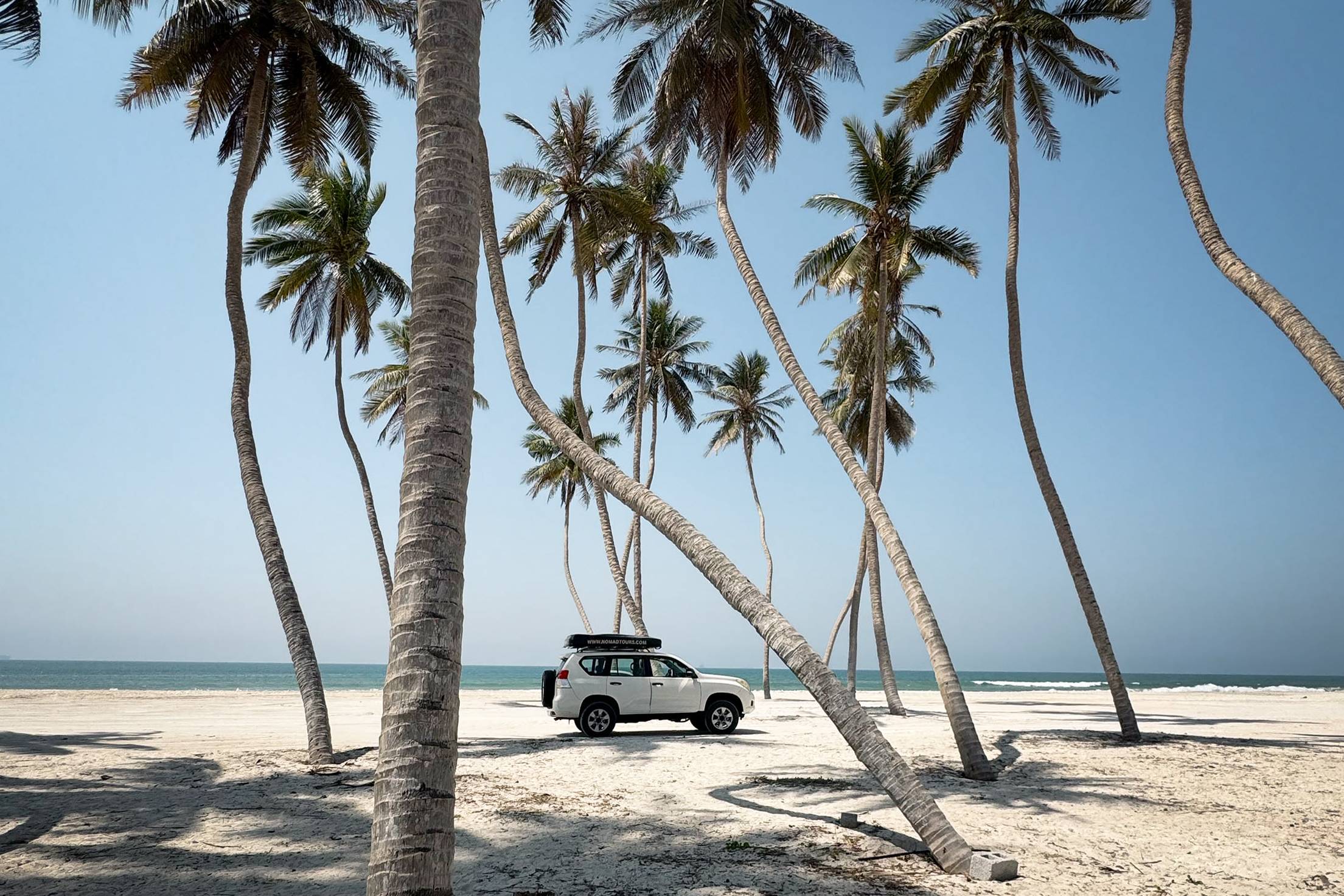
Turquoise wadi pools, the orange dunes of Wahiba, canyons in the Hajar mountains and mud-brick forts: the 16 places to visit in Oman, with how long to give each one.
Oman, the Gulf country that kept its soul
Oman is the exact opposite of what most people picture when they think of the Arabian Peninsula. No skyline of towers, no excess: instead mountains rising above 3,000 metres, canyons filled with turquoise water, a sea of orange dunes and mud-brick villages clinging to cliffs. The country is safe, clean, genuinely welcoming, and it can be travelled end to end under your own steam.
It is also a destination where the vehicle decides everything. Half of what follows sits at the end of a mountain track or in soft sand. These are the sixteen places that shape almost every trip to Oman, with the time to allow for each and what you need to get there.
Muscat and the coast
Almost every trip starts in the capital, and most people underestimate how much sits within two hours of it. Muscat is a low, white city stretched for 40 kilometres along the coast between the Hajar mountains and the Gulf of Oman, which is why it never feels like a Gulf metropolis.
It also works as a base. The four places that follow are all day trips from Muscat, none of them more than two hours away, and several of the mountain attractions further inland can be done the same way if you accept a long day at the wheel.
1. Muscat itself
Three things justify a proper stop. The Sultan Qaboos Grand Mosque, open to non-Muslim visitors in the morning, holds one of the largest hand-woven Persian carpets in the world under a chandelier that fills the prayer hall. Mutrah Souq and the corniche below it are the old trading heart of the city, best walked in the early evening when the frankincense sellers and khanjar dagger stalls open up. The Royal Opera House is worth a look even without a ticket, as an example of what contemporary Omani architecture does with traditional forms.
Allow: two days, and use them as the acclimatisation before heading inland.
2. Bimmah Sinkhole
A limestone crater filled with water so clear it looks artificial, right beside the coast road towards Sur. Steps lead down to the water and you can swim. It takes twenty minutes and sits perfectly on the drive out of Muscat, which is why almost everyone stops.
3. The Daymaniyat Islands
A protected archipelago an hour offshore from Muscat, and the best place to snorkel or dive in the country: coral, turtles, rays and reliably clear water. Boats leave from the marinas north of the city. Landing on the beaches is restricted during the turtle and seabird nesting season, so for part of the year the trip becomes a snorkel-from-the-boat day rather than a beach day.
Allow: a half day, booked the day before.
4. Ras al Jinz and the turtles
On the east coast, a reserve where green turtles come ashore to lay year round. Viewing is done at night or at first light, with a guide, on a booked slot. The peak nesting months bring the highest numbers, but there is almost always something to see.
5. Sur and the dhow yards
The town of the traditional boat builders, with a working shipyard where wooden dhows are still assembled by hand, and a white lighthouse across the lagoon. It is the natural overnight stop between the wadis and the turtles.
The wadis, the signature of the country
A wadi is a canyon carved by flash floods where water survives all year in a chain of turquoise pools. It is the most characteristic landscape in Oman, and swimming in one is among the real pleasures of the trip.
6. Wadi Shab
The famous one, and it earns it. After a short boat crossing and forty-five minutes of easy walking, a run of emerald pools leads to a cave you reach by swimming through a narrow crack in the rock. Bring a dry bag: you will be in the water for the last stretch.
Allow: a half day. Arrive early, it fills up fast.
7. Wadi Bani Khalid
Easier than Wadi Shab, with large managed pools at the foot of the mountain and no walk-in required. Ideal with children, and it sits directly on the road to the Wahiba dunes, which is why most itineraries pair the two.
8. Wadi Tiwi and Wadi Bani Awf
The two wadis for people who would rather drive than walk. Wadi Bani Awf in particular leads to Snake Canyon and the notorious Bilad Sayt track: this is genuine off-road, restricted to 4x4s and experienced drivers, with exposed sections and no room to turn around.

The desert and the dunes
9. The Wahiba Sands (Sharqiya Sands)
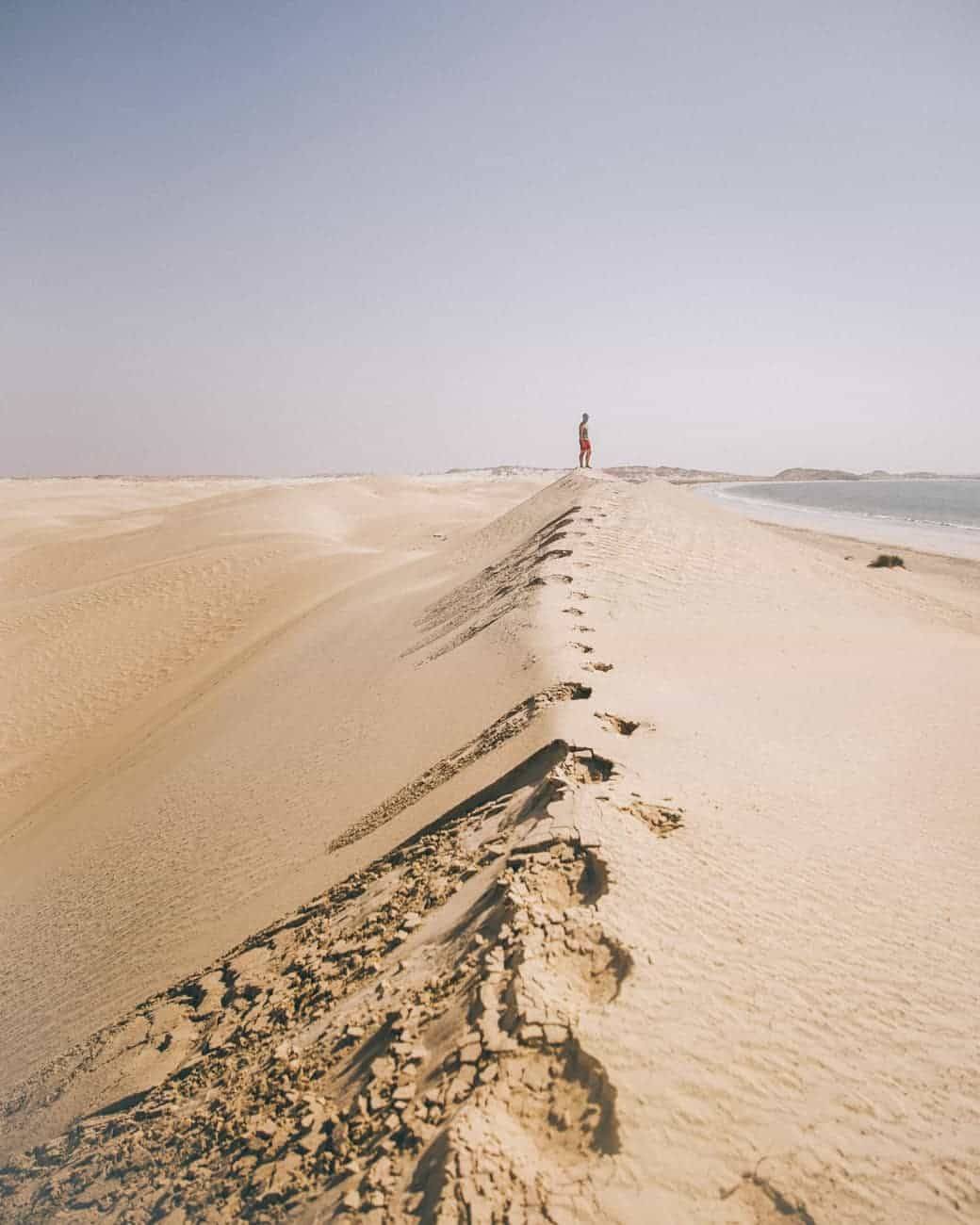
A sea of orange dunes 180 kilometres long, three hours from Muscat. You sleep in a Bedouin desert camp or wild camp on a ridge, and sunset from the top of a dune is one of the high points of any Omani trip. A camel ride at first light is the standard morning outing from the camps, and it is better than it sounds: the dunes change colour completely in the hour after dawn. Access to the camps is 4x4 only, after deflating your tyres at the edge of the sand. Our Wahiba Sands guide covers the driving technique and the camps in detail.
Allow: one night, two if you actually want to explore rather than tick it off.
10. The Rub al Khali
The Empty Quarter, the largest sand desert in the world, in the south of the country. This is expedition territory rather than tourism: full self-sufficiency, a convoy of two vehicles recommended, and GPS navigation is not optional. Most travellers see its edge from the Salalah road and leave the interior alone.
The Hajar mountains
11. Jebel Shams and the Grand Canyon of Arabia
The highest point in the country at 3,009 metres, and above all the vertiginous gorge of Wadi Ghul, known as the Grand Canyon of Arabia. The Balcony Walk, a ledge path traversing the cliff to an abandoned village, is the most spectacular hike in Oman and needs no technical skill, only a head for heights.
Allow: one night up there. It gets cold at altitude, so pack a fleece even in winter.
12. Jebel Akhdar, the Green Mountain
Terraces of roses and pomegranates cut into the cliff at 2,000 metres, above a series of villages linked by irrigation channels. Access runs through a checkpoint where a 4x4 is compulsory: the road is too steep for a two-wheel-drive vehicle and the police will simply turn you back. Rose harvest in spring is the busiest and best time.
13. Misfat al Abriyeen and Al Hamra
Misfat al Abriyeen is a stone village suspended above its own palm oasis, watered by a traditional falaj channel system listed by UNESCO. You walk it on foot through shaded alleys where the irrigation still runs at your feet. Ten minutes away, Al Hamra is one of the oldest mud-brick towns in Oman, built at the edge of the same oasis, and several of its houses are open to visitors.
Allow: a half day for both, or a night in a restored village guesthouse.
Forts and heritage
14. Nizwa and its fort
The former capital, at the foot of the mountains, with its round seventeenth-century fort tower and a working souq beside it. The Friday morning goat market is an event in its own right: loud, crowded and entirely local rather than staged for visitors.
Allow: one night, so you catch the souq early.
15. Bahla and Jabrin forts
Bahla is an enormous UNESCO-listed mud fortress with kilometres of surviving walls. Jabrin, twenty minutes further, is the most refined of the Omani forts, with painted ceilings and carved doorways. Both can be visited in the same day from Nizwa, and the pair together explain more about the country than either does alone.
16. Salalah and the Dhofar
A thousand kilometres south, a tropical region that turns green during the khareef monsoon between June and September, with waterfalls, long empty beaches and the frankincense trade that made the area rich. It functions as a separate trip and is usually done by domestic flight rather than driven, unless you have three weeks. The beach at Mughsail, backed by blowholes in the cliff, is the one most visitors remember.
Worth knowing about but harder to slot in: Musandam, the mountainous exclave in the far north, separated from the rest of Oman by the UAE. Its fjord-like inlets are reached by dhow from Khasab, and getting there means either a flight or an overland crossing.
When to go to Oman
The season runs from October to April, with daytime temperatures between 25 and 30 °C and genuinely cold nights in the mountains. From May to September the interior passes 45 °C, which makes the desert and any hiking close to impossible. The one exception is the Dhofar, around Salalah, which is at its best in July and August precisely because of the monsoon.
In practical terms: December to February is the comfortable peak, March and November are the sweet spot for hiking, and anyone travelling in high summer should be looking at Salalah rather than the north.
How many days do you need
The country is compact by Gulf standards, and mountain, desert and coast all sit within three hours of Muscat. That is what makes short trips work here.
Three or four days: Muscat, Nizwa and the forts, one night in the Wahiba Sands. Tight but genuinely worthwhile.
One week: the classic northern loop. Muscat, Nizwa, Jebel Shams, the Wahiba Sands, then Wadi Bani Khalid and Wadi Shab on the way back down the coast.
Two weeks: the same loop without rushing, plus Jebel Akhdar, Sur, the turtles at Ras al Jinz and a proper day on the water.
Three weeks: add Salalah and the Dhofar, or Musandam.
The step-by-step version of the northern loop is in our Oman itinerary.
Frequently asked questions
Is Oman worth visiting?
If you want mountains, desert and coast in one short flight, with almost no crowds and none of the artificiality of its neighbours, yes. Travellers who want nightlife, shopping malls and beach resorts will find Dubai better suited.
Is three days in Oman enough?
Enough for a real taste, not for the country. Three days covers Muscat, Nizwa and one night in the dunes. Anything beyond that means either a week or accepting that you will drive more than you look.
Do you need a 4x4 in Oman?
For Muscat, Nizwa and the main highways, no. For Jebel Akhdar (enforced at a checkpoint), the Wahiba Sands, Wadi Bani Awf and most wadi approaches, it is essential.
Can women wear shorts in Oman?
Shoulders and knees stay covered in public, for men and women alike. Swimming in a wadi is done in a t-shirt and long shorts; a swimsuit on its own is poorly received outside private hotel beaches.
Do I need a visa for Oman?
Most European nationalities apply for a tourist visa online before departure. Allow a few working days for processing, and check the current rules for your passport, since short-stay exemptions have changed more than once.
Is Oman safe?
It is one of the safest countries in the world for independent travel, including for women and for camping out. The real vigilance goes on heat, flash floods in the wadis and track conditions, not on personal security.
What should I know about driving in Oman?
Main roads are excellent and well signed in Arabic and English. Speed cameras are numerous and unforgiving. Never enter a wadi bed when rain is forecast anywhere upstream, and refuel whenever you drop below half a tank in the interior.
In short
Oman offers a density that is rare: mountain, desert and coast all within three hours of the capital, and a country that lets you camp wherever you stop. The only genuine prerequisite is the vehicle, which determines access to half of this list. For the concrete order of the stages, see our Oman itinerary.

