 EN
 FR
 DE
 NL
Cliff-top monasteries, 5,000 m Caucasus peaks, 8,000-year-old vineyards and villages of medieval towers: 15 places to visit in Georgia, with how long to give each.
A small country with rare density
Georgia fits into a territory about twice the size of Belgium, and yet you can spend weeks there without going in circles. Three hours of driving take you from the lanes of Tbilisi to peaks above 5,000 metres; three more and you are in a vineyard region that has been making wine for eight thousand years.
It is a country you cover by car, because the good part sits between the towns rather than inside them. These are the fifteen places that shape almost every trip.
The Caucasus mountains
1. Kazbegi and Gergeti Trinity Church
The postcard image of Georgia: a fourteenth-century church at 2,170 m with Mount Kazbek and its 5,047 metres behind it. You reach it from the village of Stepantsminda, at the end of the Georgian Military Highway. The walk up takes about ninety minutes, or a steep track takes 4x4s.
Allow: two nights, to give yourself a chance of clear skies.

2. Svaneti and Ushguli
The most spectacular region in the country, in the north-west: deep valleys bristling with medieval defensive towers, a distinct language, and Ushguli, one of the highest permanently inhabited villages in Europe. Mestia is the logical base. The access road is long but now paved.
Allow: three nights minimum, since the drive alone is a day.
3. Tusheti
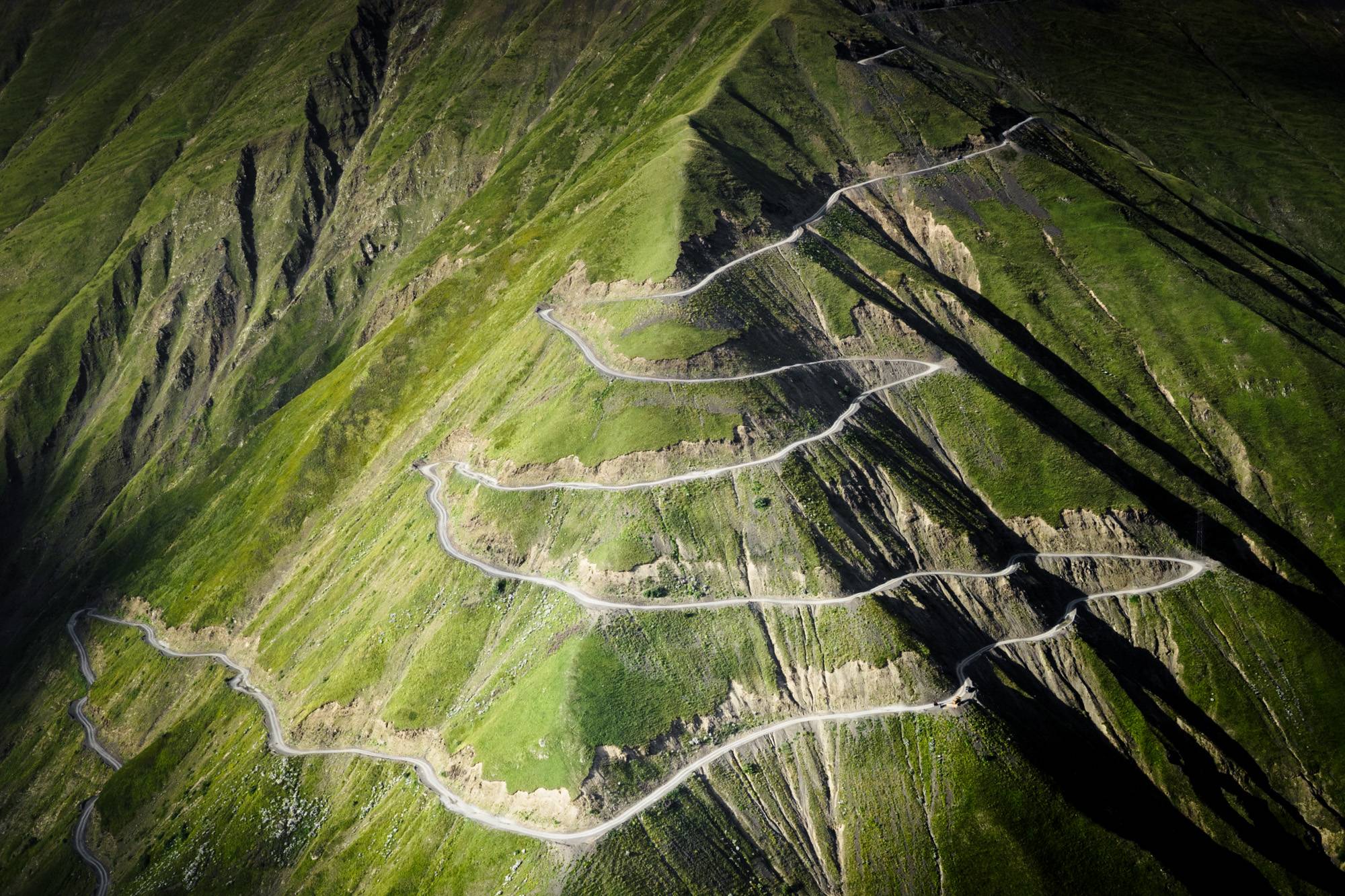
The Georgian end of the world, reachable only over the Abano Pass (2,850 m) on a track regularly listed among the most dramatic on earth. Open June to September only, and strictly 4x4.
Allow: three days, including a full day of track each way.

4. Truso Valley
A valley of coloured mineral springs and ruined fortresses running up towards the Russian border. The track is easy in a 4x4 and the walking suits everyone.
5. Juta and the Chaukhi massif
A hamlet at the foot of a rock wall nicknamed the Georgian Dolomites. The starting point for some of the best day hikes in the country.
Kakheti and Georgian wine
6. Kakheti, the birthplace of wine
Georgia claims eight thousand years of winemaking, which makes it the oldest known wine country. Kakheti, east of Tbilisi, is its heart: vineyards to the horizon, family cellars, and a UNESCO-listed method, fermentation in qvevri, large clay vessels buried in the ground.
Sighnaghi, the hilltop "town of love", and Telavi are the two classic bases. Tastings at producers need no booking and cost very little.
Allow: two nights. Note that Georgia has a zero-tolerance drink-driving law.
7. David Gareja monastery
A sixth-century monastic complex carved into rock, in semi-desert on the Azerbaijani border. The landscape looks nothing like the rest of the country. The access track needs decent ground clearance.
8. Vashlovani National Park
Steppe, canyons and mud volcanoes in the far east. Little visited, genuinely wild, and 4x4 only with a permit issued at the park entrance.

Cities and heritage
9. Tbilisi
A capital on a human scale, mixing carved wooden balconies, the sulphur baths of Abanotubani, Soviet architecture and a serious bar scene. The Mtatsminda funicular gives the best overview.
Allow: two to three nights, at the start or end of the trip.
10. Mtskheta
The former capital, twenty minutes from Tbilisi, with Svetitskhoveli Cathedral and the Jvari monastery on its hill above the confluence of two rivers. This is the religious heart of the country, UNESCO-listed.
11. Uplistsikhe
A cave town cut into the rock nearly three thousand years ago, on the road between Tbilisi and Gori. An hour is enough.
12. Kutaisi and the Prometheus Caves
The second city and gateway to the west, with Bagrati Cathedral, Gelati monastery and a spectacular cave system nearby.
Canyons, coast and the great road
13. Martvili and Okatse canyons
Two green gorges in western Georgia, one explored by boat and the other on a suspended walkway. Easy to reach and very photogenic.
14. Batumi and the Black Sea
A subtropical seaside city with wildly eccentric architecture, in total contrast with the rest of the country. Mostly useful if you fly in or out of there.
15. The Georgian Military Highway
Not a place but a drive, and still one of the highlights: 200 km north from Tbilisi past Ananuri fortress, the ski town of Gudauri and the Cross Pass at 2,379 m, up to Kazbegi.
When to go
May and June: green valleys, mild temperatures, but the high passes may still be shut. July and August: everything is open, including Tusheti and Svaneti, but Tbilisi and Kakheti get very hot. September and October: our pick, with the Kakheti harvest and mountains still accessible. In winter only Tbilisi, Gudauri and the coast stay practical.
Frequently asked questions
What can you do in Georgia in one week?
Tbilisi, Mtskheta, the Military Highway up to Kazbegi, then Kakheti. It is the densest and most accessible route, with no difficult tracks.
Do you need a 4x4 in Georgia?
Not for the main roads or the Military Highway, which is paved. Yes, absolutely, for Tusheti, Vashlovani, the climb to Gergeti and the side valleys of Svaneti.
Is Georgia expensive?
No, it is one of the most affordable destinations in Europe: accommodation, restaurants and fuel all cost markedly less than in western Europe.
Do you need a visa?
Most European and many other nationalities enter visa-free for up to a year. A national driving licence is usually accepted, though an international permit avoids any argument.
What language do people speak?
Georgian, with a unique alphabet. Russian is still widely understood, and English is spreading fast among younger people and in tourism.
In short
Georgia suits independent travel unusually well: short distances, landscapes that change every hundred kilometres, and a real reputation for hospitality. The only decision that shapes the trip is the vehicle, which determines whether Tusheti and upper Svaneti are on your list or not.
